
San Luis Obispo Resident Lookup Coverage
The right San Luis Obispo resident lookup source depends on the fact being tested. The County Assessor can connect a name to a property interest where authorized, but an owner is not automatically an occupant. The recorder index shows a party in an instrument at a date. The voter tool is chiefly personal verification, while the court portal shows a public procedural record within its coverage. Vital indexes and certificates prove event facts under different access rules. Business filings, licenses, probate, and obituaries add affiliation or family clues.
| Record | What it can confirm | Where to search | Access boundary |
|---|---|---|---|
| Parcel assessment | Ownership interest, situs, tax mailing context | County Assessor and GIS | Owner is not necessarily occupant |
| Recorded instrument | Party, role, date, and land or lien event | Clerk-Recorder index | Free metadata; image route applies |
| Voter registration | Personal status and qualifying residence | County or state status tool | Identity-gated or permitted application |
| Court docket | Party and public procedural history | re:SearchCA or clerk | Remote public scope mainly post-2014 |
| Vital index or certificate | Event, date, place, and relationship clue | County Clerk-Recorder or CDPH | Copy eligibility differs by record |
| Business or license filing | Filed role, status, and affiliation | bizfile, FBN, or DCA | Filed address is not residence proof |
| Probate or obituary | Decedent, relatives, date, and last locality | Court, newspaper, or library | Living-person details may be withheld |
Use a property clue first when the name may connect to land. Use court, vital, or business sources when the question is about a filed event. Use library and newspaper collections when the person belongs to an earlier period. If the desired answer is a current street, the address-based San Luis Obispo street directory route has a different purpose.
San Luis Obispo Same-Name Controls
A name alone is a weak key in a San Luis Obispo resident lookup. A careful resident lookup keeps the original spelling beside a normalized form. Normalize middle initials, suffixes, hyphens, accents, married or former names, and entity or trust names. Then look for two independent identifiers. An APN and legal description can separate two property owners. A date band, case number, business number, relative, or spouse can separate two court or directory entries.
Do not call a clerk asking whether an unverified person lives at an address. Ask which record series covers the date, whether an index is public, and which request or copy route applies. A wrong result should be corrected with the custodian that created it. A search service cannot amend the official source, and a portal's no-match message may reflect a closed record, a spelling variant, or a coverage limit.
For a former classmate, a yearbook, Cal Poly archive, reunion note, or newspaper can anchor the person to an era before a current source is attempted. For a family connection, add relatives and places, not just a wider name search.
San Luis Obispo re:SearchCA Fields
The Superior Court of California, County of San Luis Obispo launched re:SearchCA in January 2026 and directs researchers to it for publicly accessible cases filed after 2014. Registration uses an eFileCalifornia account. The portal's search choices are designed for a party or case, not for a general portrait of a person. Search by person, business, or case number, then narrow the match with exact mode, county, case category, or filed dates where the portal offers those controls.
| Search control | Type | When it helps | Result caution |
|---|---|---|---|
| Search type | Selector | Choose person, business, or case number | Required mode sets the next fields |
| First, middle, last name | Text | Person search and spelling variants | Same-name results need a second key |
| Business or organization | Text | Entity party search | Do not treat entity role as residence |
| Case number | Text | Direct retrieval | Best key when already known |
| Exact match, county, type, dates | Toggle and filters | Reduce broad result sets | Coverage remains mainly post-2014 online |
A public docket may show case number, style, party names and roles, category, filing date, assignment, and register-of-actions events. Remote document access varies. Criminal documents can be viewed at onsite kiosks, and sealed, juvenile, adoption, and confidential material does not become public because a name is known.
The San Luis Obispo Superior Court online-services page is the source captured for this route.
The court criminal case information request instructions are the source captured for the copy and kiosk fallback.
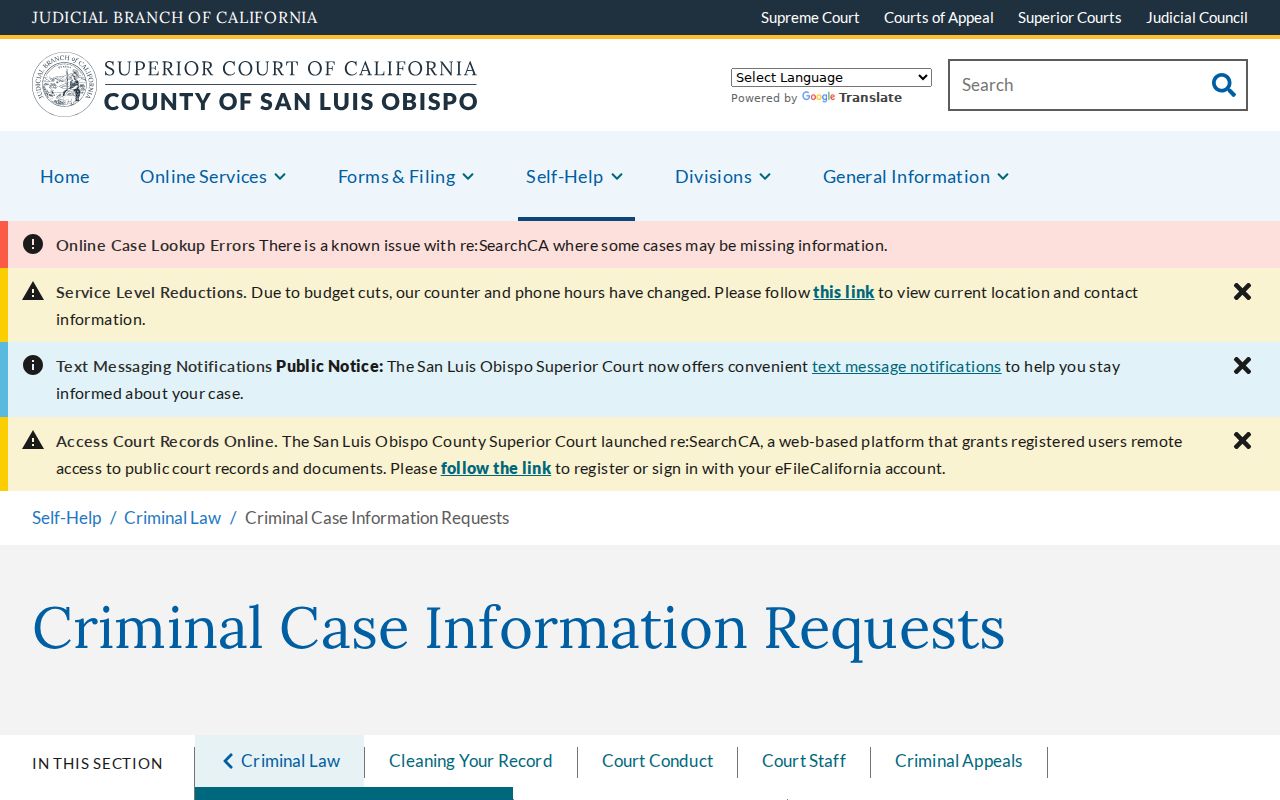
The court view shows why a case request should retain its case number, party role, and filing date rather than just a name.
Federal litigation for the area belongs in the U.S. District Court for the Central District of California, Western Division, and its party or case-number trail is searched through PACER. PACER is a federal docket route, not a substitute for the San Luis Obispo County court index. A resident lookup that reaches a federal case should keep that jurisdiction separate.
San Luis Obispo Vital Index Access
California does not use a simple one-number opening rule for every local vital record. San Luis Obispo County birth and death indexes are public for in-person inspection, but the research found no internet-searchable local name index. Certified copies are divided into authorized and informational categories under Health and Safety Code sections 103525 and 103526. A confidential marriage certificate is limited to the spouses or a court-authorized person under Family Code section 511.
Public Health handles certified births and deaths for events in the most recent two years. Older local events route to the Clerk-Recorder. Online requests return by mail. In-person service is available Monday through Friday from 8 to 4, and notarized mail requests use a check or money order and a self-addressed stamped envelope. The county announced fee changes effective July 1, 2026, so verify the current schedule before sending a request.
The California Department of Public Health handles statewide copies and has a mail route for public marriage certificates. CDPH coverage is 1905 through 1999, 2001, and 2008 through 2025. For 2000 and 2002 through 2007, request from the county recorder where the license was issued. CDPH does not hold confidential-marriage records and states that it has no direct online ordering portal.
The CDPH marriage-record instructions are the source captured for the state route. An index clue can guide a request, but it does not confer copy eligibility.
Verify San Luis Obispo Resident Records
A defensible San Luis Obispo resident lookup anchors a name before it tries to expand the record set. Start with an address or APN when one exists. Compare the situs and mailing context, then use the deed index for a dated party link. Run a court party search with name variants. Use a vital index only for the event question it can answer. Order a certified copy only after the eligibility and request route are clear.
- Write the person's full name, variants, known date or age range, and the city or county clue.
- Use the assessor or parcel route if a property connection is plausible, and save the APN or legal description.
- Search the recorder by party and date, then recheck the same person in court, business, license, or unclaimed-property records.
- Use a vital index, yearbook, obituary, or newspaper to test the relationship or historical period without assuming it proves a current address.
- Ask the custodian for the proper copy, correction, or records request when the index is not enough.
- Docket
- The court's running index of a case, its parties, filings, and events.
- Index versus image
- An index gives finding fields; an image or certified copy supplies the underlying document or official text.
- Certified copy
- A copy issued or authenticated by the custodian for a defined legal or evidentiary use.
- Authorized copy
- A vital-record copy limited to a person who meets the statute's relationship or authority rule.
A same-name hit becomes useful only when the date, parcel, relative, filing role, or case number agrees with the other source.
San Luis Obispo Probate and Heirs
Probate offers an official family-history path when the question concerns an heir or successor. A docket can point to a decedent, petition, notice, named relative, and court event. A later deed can show a successor instrument or transfer. An obituary or newspaper notice may add a former locality, organization, or relationship, but submitted notices can contain errors. Treat the obituary as a lead and compare it with a court or vital source.
Begin with the decedent's full name and death-date range. Search the Superior Court where the public index allows, then ask the clerk about an archived or nonremote file. Compare the named successor with a recorded deed or other instrument. If the trail ends, the History Center, library newspaper microfilm, and genealogy collections may hold the missing family context.
Probate can identify a lawful record path without turning a living person's address into a public conclusion. Keep the search about the estate, family connection, or history question that led to it.
San Luis Obispo Business and License Clues
California bizfile can find corporations, LLCs, LPs, and nonprofits by name or file number. Results may show formation or registration date, status, jurisdiction, street and mailing addresses, agent for service, Statement of Information due date, and filed officers, directors, members, or managers. The default result set is capped at the 500 closest matches unless the advanced search is narrowed. LLPs and general partnerships use a paper request route instead.
The county Fictitious Business Name index can add a local DBA registrant, address, and filing date. San Luis Obispo's active business-license spreadsheets cover 2014 through 2026 and include business name, business address and city, owner name, type, and a downtown district indicator. The Department of Consumer Affairs search adds license number, board, city or county, license type, status, public action, and documents for many boards. Each is an affiliation or filed role, not home-residence proof.
The SLO Chamber member directory is a useful local affiliation source with keyword, category, and ZIP search across more than 1,400 member businesses in good standing.
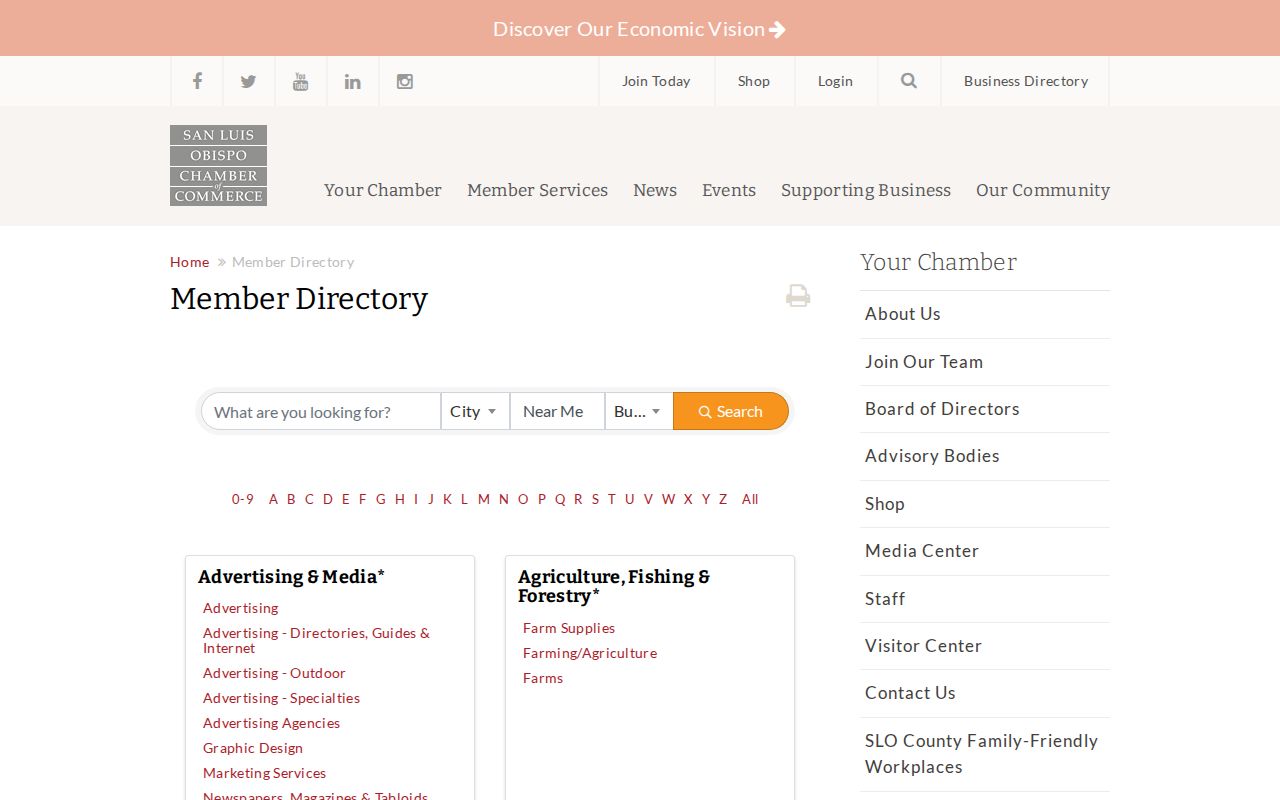
The Chamber view can connect a name to a business category and contact channel while keeping the residence question separate.
San Luis Obispo Adoption and Privacy
Adoption-origin questions require an official California route through the Department of Social Services adoption-records and information-about-birth-family process, along with any court procedure that applies. Confidentiality is part of the record, not a search obstacle to work around. Do not use a public name match to bypass a sealed or protected file.
Safe at Home, under Government Code sections 6205 through 6216, gives eligible California residents a substitute mailing address, mail forwarding, agent-for-service route, confidential voter registration, and public-agency acceptance of the substitute address. It is preventive rather than retroactive. It cannot erase information that was already in a deed or other public record. DMV information, utility data, juvenile material, adoption records, and protected voter fields have their own limits.
The California Safe at Home applicant information is the source captured for the confidentiality route.
The California Megan's Law website is the source captured for the public registry example.
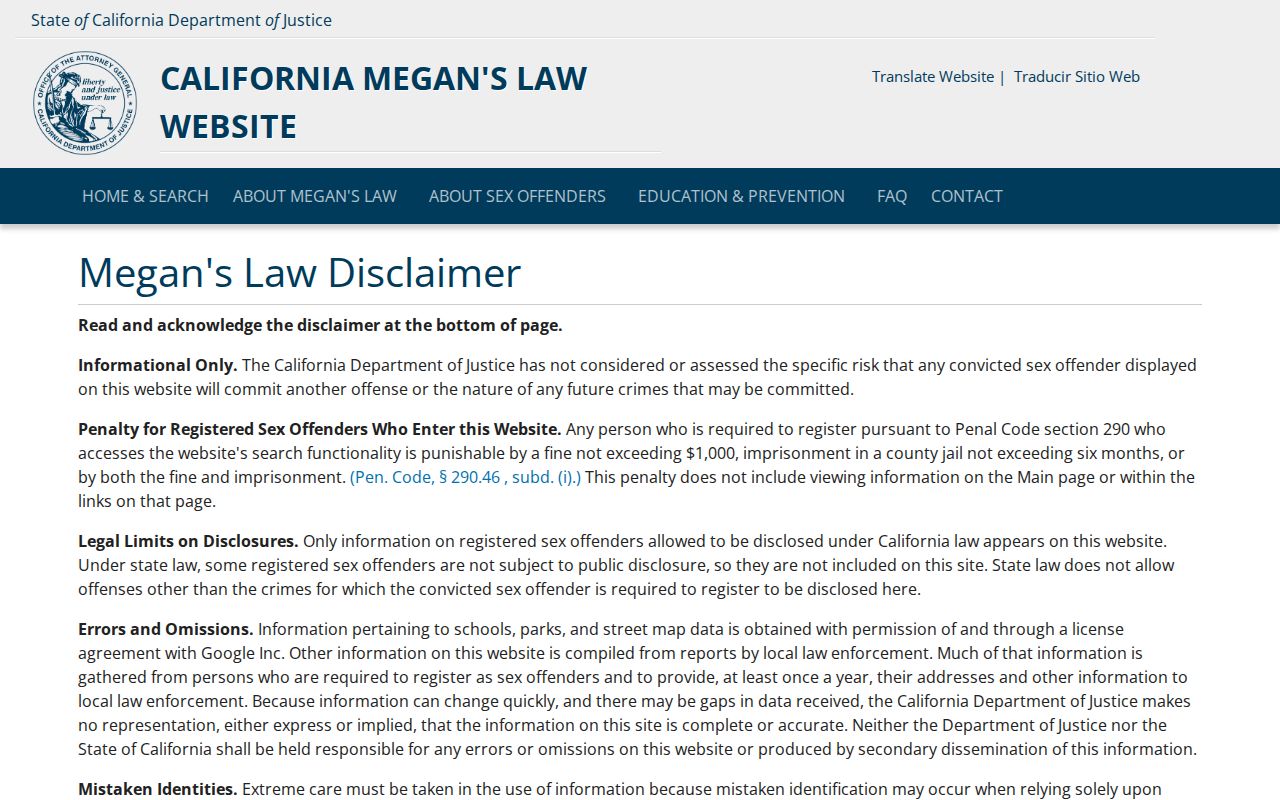
Public registry pages carry their own exclusions and warnings, so a name result must stay within the purpose and limits of that source.
San Luis Obispo Resident Lookup Limits
California's Public Records Act, Government Code sections 7920.000 and following, supports requests for reasonably described existing records. It does not open every personal field. Agencies can withhold privacy, investigatory, privileged, security, juvenile, adoption, or otherwise protected material. A CPRA request can ask for a date range, electronic delivery, and segregable nonexempt portions, but a ten-day determination is not a promise that the record will be produced in ten days.
When a lookup result is wrong, contact the custodian. When a portal has no result, test spelling, date, court, county, or record series before treating that absence as fact. The best answer may be a record that confirms one narrow event, not a claim about where a person lives now. A reliable resident lookup ends at that boundary.
Lawful personal use. Use a San Luis Obispo resident lookup for family history, reconnecting, estate research, civic records, or personal safety awareness. Never use a name trail to stalk, harass, intimidate, or harm anyone.
Protected data stays protected even when a researcher knows the name. A respectful lookup stops at the record boundary and uses the official correction or request channel.